
Tag: auto glass replacement
Decision Factors That Influence When Windshield Damage Requires Full Replacement in Service-Based Automotive Care
The U.S. National Highway Traffic Safety Administration has long emphasized the role of vehicle visibility and structural integrity in road safety. A windshield is more than a sheet of glass at the front of a car. It supports vehicle structure, contributes to airbag performance, and protects drivers from road debris. Small chips can sometimes remain manageable, but automotive service providers face more complex decisions when damage begins to affect safety and reliability.
Repair shops and automotive glass specialists usually work within structured evaluation systems rather than relying on visual judgment alone. Service providers often refer to industry guidance and practical assessment methods when deciding when windshield damage needs replacement. The goal is to balance driver safety, repair feasibility, operational efficiency, and cost. The process becomes more detailed than many consumers expect.
How Automotive Service Providers Evaluate Windshield Damage
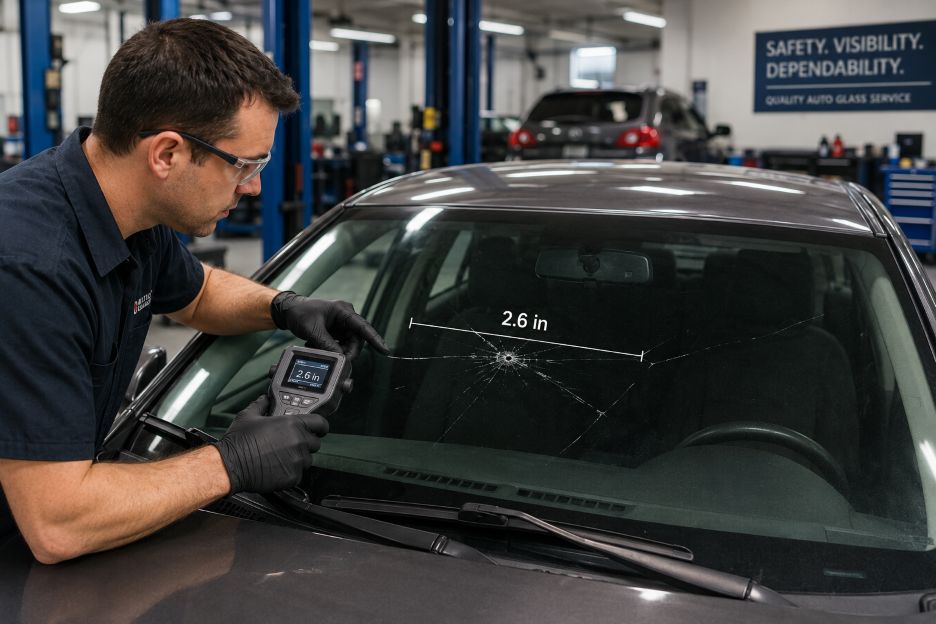
Windshield assessments inside commercial repair environments follow a workflow that helps technicians create consistent recommendations. During an inspection, technicians look beyond the visible crack itself. They examine the entire glass structure and determine whether the damage may spread over time.
The Auto Glass Safety Council explains that windshield systems play a major role in occupant retention and vehicle crash performance. Because of this, repair businesses typically use standards designed to minimize uncertainty during decision-making.
Technicians generally begin with several initial questions:
- How large is the damaged area?
- Where is the crack located?
- Has moisture entered the damaged section?
- Does the crack affect visibility?
- Has previous repair work already been performed?
These early checks help narrow down whether a simple repair remains practical or whether complete glass replacement becomes the safer route.
Key Factors That Shape Replacement Decisions
Crack Length
Crack size often becomes the first point of evaluation. Small chips and short cracks may remain repairable under certain conditions. Larger fractures create a different situation because stress can continue spreading across the windshield.
The National Windshield Repair Association notes that larger cracks become increasingly difficult to stabilize effectively. Once the structural pattern becomes more complex, repair materials may no longer restore sufficient integrity.
Length alone does not tell the entire story, however. A relatively short crack positioned in a critical area may create greater concern than a longer crack located elsewhere.
Location of Damage
Position matters significantly. Cracks near the edges of the windshield often create concern because edge areas help distribute structural loads across the glass surface.
Damage near corners can weaken the windshield’s ability to handle vibration and movement during regular driving. Road conditions, temperature shifts, and body flex can accelerate crack expansion.
Repair technicians also pay close attention to damage within the driver’s primary viewing area. Even small imperfections can scatter light and create visual distortion.
Driver Visibility Impact
Visibility remains one of the strongest considerations during assessment. A repaired section may technically restore structural performance, but visual clarity introduces another question.
Research published by the Transportation Research Board indicates that visual distractions and reduced visibility can affect driver response time and hazard recognition.
If a crack crosses the driver’s direct line of sight, service providers often lean toward recommending full glass replacement rather than risking long-term visibility concerns.
Insurance Policies and Pricing Structures Influence Decisions
Technical findings are important, yet financial realities often influence how repair recommendations are delivered and interpreted.
Insurance coverage varies across providers and policy types. Some plans cover windshield repairs with limited out-of-pocket cost because repairs usually cost less than replacement work. Others apply deductibles that can shift consumer decisions.
This creates an interesting balance for repair businesses. Shops aim to maintain safety standards while working within insurance reimbursement structures and customer expectations.
Pricing models also differ depending on vehicle type and technology requirements. Modern vehicles increasingly use advanced driver assistance systems, commonly called ADAS systems, which may require recalibration after windshield replacement.
The Insurance Institute for Highway Safety has highlighted the growing dependence of vehicle safety systems on sensors and cameras. As a result, windshield replacement today often involves more than installing new glass.
Operational Challenges for Repair Businesses
Automotive service providers constantly manage competing priorities. Safety standards remain central, yet businesses also consider workflow efficiency, labor availability, customer satisfaction, and material costs.
Repairing glass generally requires less time than full replacement. However, recommending a repair simply because it is faster creates risk if the damage later spreads.
These challenges become more noticeable during periods of supply delays or high customer demand. Repair shops must decide whether immediate cost savings outweigh the possibility of future issues.
Many businesses therefore use standardized inspection protocols to reduce inconsistency. Structured processes create a more balanced approach that protects both customer interests and operational performance.
Understanding Professional Recommendations Without Oversimplifying Them
Drivers sometimes assume recommendations follow a simple rule based on crack size alone. Actual evaluations rarely work that way. Windshield condition involves multiple variables that interact with one another.
Understanding replacement thresholds means looking at the larger picture. Visibility concerns, crack placement, structural risk, repair history, and vehicle technology all contribute to the final recommendation.
Consumers benefit from asking practical questions during consultations. Understanding why a technician recommends complete glass replacement versus repair often reveals considerations that are not obvious at first glance. Similar decision-making patterns appear across the automotive industry, where Understanding how vehicle purchase decisions are made can provide useful context for evaluating recommendations, pricing structures, and customer communication processes.
Damage assessment ultimately works best as a conversation rather than a quick visual estimate. Repair limits and replacement indicators are rarely universal. As vehicles become more technologically complex, decisions surrounding glass restoration will likely become even more detailed. Looking beyond cost alone helps drivers interpret professional advice with greater confidence and a clearer understanding of long-term safety.
